
Ang granite usa ka klase sa igneous rock nga gikubkob tungod sa kusog, densidad, kalig-on, ug resistensya niini sa taya. Apan ang granite daghan usab og gamit – dili lang kini para sa mga kwadro ug rektanggulo! Sa tinuod lang, masaligon kaming nagtrabaho uban sa mga sangkap sa granite nga gi-engineered sa mga porma, anggulo, ug kurba sa tanang klase sa kanunay—nga adunay maayo kaayong mga resulta.
Through our state of the art processing, cut surfaces can be exceptionally flat. These qualities make granite the ideal material to create custom-size and custom-design machine bases and metrology components. Granite is:
■ ma-machine
■ tukma nga patag kon putlon ug mahuman
■ dili matarog
■ lig-on
■ dugay molungtad
Sayon ra usab limpyohan ang mga sangkap sa granite. Kung maghimo og custom designs, siguruha nga mopili og granite tungod sa maayong mga benepisyo niini.
MGA SUMBANAN / MGA APLIKASYON SA TAAS NGA PAGKASUBO
Ang granite nga gigamit sa ZHHIMG para sa among standard surface plate products adunay taas nga quartz content, nga naghatag og mas maayong resistensya sa pagkaguba ug pagkaguba. Ang among Superior Black nga mga kolor adunay ubos nga water absorption rates, nga nagpamenos sa posibilidad nga ang imong precision gauges motaya samtang gibutang sa mga plato. Ang mga kolor sa granite nga gitanyag sa ZHHIMG moresulta sa gamay nga silaw, nga nagpasabot og gamay nga eyestrain para sa mga indibidwal nga naggamit sa mga plato. Gipili namo ang among mga klase sa granite samtang gikonsiderar ang thermal expansion aron mapadayon kini nga aspeto nga minimal.
CUSTOM APPLICATIONS
Kon ang imong aplikasyon magkinahanglan og plato nga adunay gipahaom nga mga porma, sinulid nga mga insert, mga slot o uban pang machining, gusto nimong mopili og materyal sama sa Black Jinan Black. Kini nga natural nga materyal nagtanyag og labaw nga kalig-on, maayo kaayo nga pag-dampen sa vibration, ug gipauswag nga machinability.
Importante nga matikdan nga ang kolor lamang dili timailhan sa pisikal nga mga kalidad sa bato. Sa kinatibuk-an, ang kolor sa granite direktang may kalabutan sa presensya o pagkawala sa mga mineral, nga mahimong walay kalabotan sa mga kalidad nga makahimo og maayong materyal sa surface plate. Adunay mga granite nga pink, gray, ug itom nga maayo kaayo alang sa mga surface plate, ingon man mga granite nga itom, gray, ug pink nga dili gyud angay alang sa mga aplikasyon sa katukma. Ang mga kritikal nga kinaiya sa granite, nga may kalabotan sa paggamit niini isip materyal sa surface plate, walay kalabotan sa kolor, ug mao ang mosunod:
■ Katig-a (pagliko ubos sa karga - gipakita sa Modulus of Elasticity)
■ Katig-a
■ Densidad
■ Pagsukol sa pagkaguba
■ Kalig-on
■ Porosidad
Among gisulayan ang daghang mga materyales sa granite ug gitandi kini nga mga materyal. Sa katapusan among nakuha ang resulta, ang Jinan black granite mao ang pinakamaayong materyal nga among nahibal-an. Ang Indian Black granite ug South African granite parehas sa Jinan Black Granite, apan ang ilang pisikal nga mga kabtangan mas gamay kaysa sa Jinan Black Granite. Ang ZHHIMG magpadayon sa pagpangita og dugang nga materyal sa granite sa kalibutan ug itandi ang ilang pisikal nga mga kabtangan.
Para sa dugang impormasyon bahin sa granite nga angay para sa imong proyekto, palihug kontaka kami.info@zhhimg.com.
Lain-laing mga sukdanan ang gigamit sa lainlaing mga tiggama. Daghang mga sukdanan sa kalibutan.
DIN Standard, ASME B89.3.7-2013 o Federal Specification GGG-P-463c (Granite Surface Plates) ug uban pa isip basehan sa ilang mga espesipikasyon.
Ug makahimo kami og granite precision inspection plate sumala sa imong mga kinahanglanon. Welcome sa pagkontak kanamo kung gusto nimo mahibal-an ang dugang nga impormasyon bahin sa dugang nga mga sumbanan.
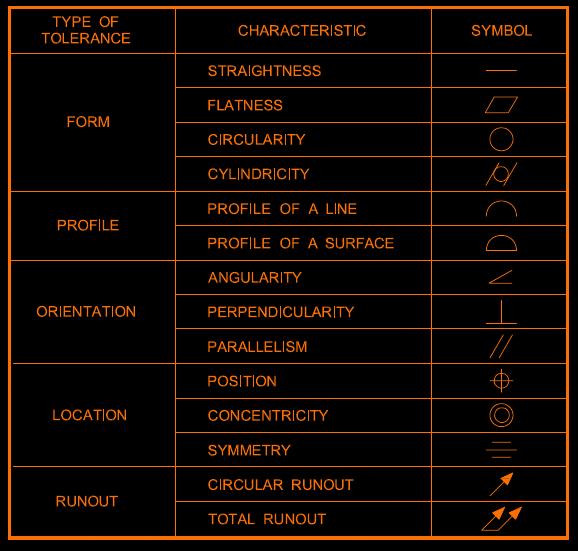
Ang pagkapatag mahimong isipon nga ang tanang punto sa nawong anaa sulod sa duha ka parallel nga mga patag, ang base plane ug ang roof plane. Ang sukod sa distansya tali sa mga patag mao ang kinatibuk-ang pagkapatag sa nawong. Kini nga sukod sa pagkapatag kasagarang adunay tolerance ug mahimong maglakip sa usa ka grade designation.
Pananglitan, ang mga flatness tolerances para sa tulo ka standard nga grado gihubit sa federal specification nga gitino sa mosunod nga pormula:
■ Grado sa Laboratoryo AA = (40 + diagonal nga kuwadrado/25) x .000001" (unilateral)
■ Grado sa Inspeksyon A = Grado sa Laboratoryo AA x 2
■ Grado sa Lawak sa Himan B = Grado sa Laboratoryo AA x 4.
Para sa standard sized surface plates, among gigarantiya ang flatness tolerances nga molapas sa mga kinahanglanon niini nga espesipikasyon. Gawas pa sa flatness, ang ASME B89.3.7-2013 & Federal Specification GGG-P-463c nagtubag sa mga hilisgutan lakip ang: repeat measurement accuracy, material properties sa surface plate granites, surface finish, support point location, stiffness, acceptable methods of inspection, installation of threaded inserts, ug uban pa.
Ang mga granite surface plate ug granite inspection plate sa ZHHIMG nakab-ot o milabaw sa tanang kinahanglanon nga gilatid niini nga espesipikasyon. Sa pagkakaron, walay klarong espesipikasyon para sa mga granite angle plate, parallels, o master squares.
Ug makit-an nimo ang mga pormula para sa ubang mga sumbanan saI-DOWNLOAD.
Una, importante nga huptan nga limpyo ang plato. Ang abrasive dust nga dala sa hangin kasagaran ang pinakadako nga tinubdan sa pagkaguba sa plato, tungod kay kini kasagarang motapot sa mga workpiece ug sa mga contact surface sa mga gage. Ikaduha, tabuni ang imong plato aron mapanalipdan kini gikan sa abog ug kadaot. Ang kinabuhi sa pagkaguba mahimong mapalawig pinaagi sa pagtabon sa plato kung dili gamiton, pinaagi sa pagtuyok sa plato matag karon ug unya aron ang usa ka lugar dili magamit og sobra, ug pinaagi sa pag-ilis sa steel contact pad sa gauging gamit ang carbide pad. Usab, likayi ang pagbutang og pagkaon o soft drinks sa plato. Timan-i nga daghang soft drinks ang adunay carbonic o phosphoric acid, nga makatunaw sa mas humok nga mga mineral ug makabilin og gagmay nga mga lungag sa ibabaw.
Nagdepende kini kung giunsa paggamit ang plato. Kung mahimo, among girekomendar nga limpyohan ang plato sa pagsugod sa adlaw (o shift sa trabaho) ug pag-usab sa katapusan. Kung ang plato mahugawan, labi na sa lana o lagkit nga mga pluwido, kinahanglan kini limpyohan dayon.
Limpyohi kanunay ang plato gamit ang likido o ZHHIMG Waterless surface plate cleaner. Importante ang pagpili sa mga solusyon sa pagpanglimpyo. Kung mogamit og volatile solvent (acetone, lacquer thinner, alcohol, ug uban pa) ang evaporation mopabugnaw sa nawong, ug modaot niini. Sa kini nga kaso, kinahanglan nga tugutan ang plato nga mo-normalize sa dili pa kini gamiton kay kung dili, adunay mga sayop sa pagsukod nga mahitabo.
Ang gidugayon sa oras nga gikinahanglan aron ma-normalize ang plato magkalahi depende sa gidak-on sa plato, ug sa gidugayon sa pagpabugnaw. Usa ka oras ang igo na para sa gagmay nga mga plato. Duha ka oras ang gikinahanglan para sa mas dagkong mga plato. Kon mogamit og water-based cleaner, aduna usay evaporative chilling.
Ang plato mopreserbar usab sa tubig, ug kini mahimong hinungdan sa pagkataya sa mga parte sa metal nga mokontak sa nawong. Ang ubang mga panglimpyo magbilin usab og lagkit nga residue human kini mamala, nga makadani sa abog nga molupad gikan sa hangin, ug sa tinuod makadugang sa pagkaguba, imbes nga makapamenos niini.
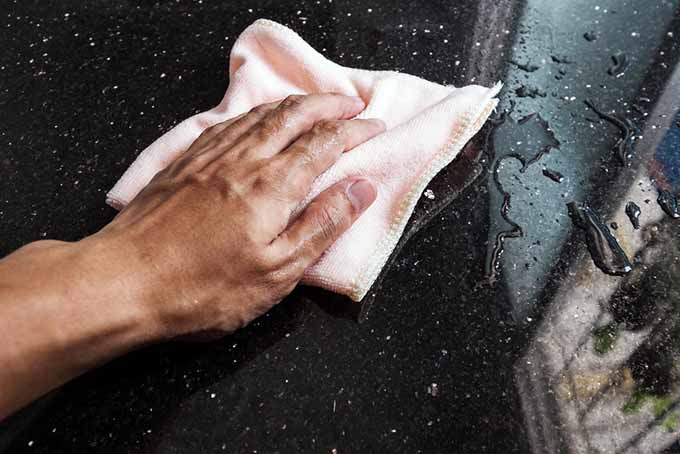
Kini nagdepende sa paggamit sa plato ug sa palibot niini. Among girekomendar nga ang usa ka bag-ong plato o precision granite accessory makadawat og kompletong recalibration sulod sa usa ka tuig gikan sa pagpalit. Kon ang granite surface plate kanunayng gamiton, mahimong mas maayo nga pamub-on kini nga interval ngadto sa unom ka bulan. Ang binulan nga inspeksyon para sa balik-balik nga mga sayop sa pagsukod gamit ang Electronic level, o susamang device magpakita sa bisan unsang nag-uswag nga mga lama sa pagkaguba ug pipila lang ka minuto ang pagpahigayon niini. Human matino ang mga resulta sa unang recalibration, ang interval sa calibration mahimong palugwayan o pamub-on sumala sa gitugot o gikinahanglan sa imong internal quality system.
Makatanyag kami og serbisyo aron matabangan ka nga masusi ug ma-calibrate ang imong granite surface plate.

Adunay daghang posibleng mga hinungdan sa mga kalainan tali sa mga kalibrasyon:
- Ang nawong gihugasan gamit ang init o bugnaw nga solusyon sa dili pa ang kalibrasyon, ug wala gihatagan og igong panahon aron ma-normalize.
- Ang plato dili husto nga gisuportahan
- Pagbag-o sa temperatura
- Mga draft
- Direkta nga kahayag sa adlaw o uban pang init nga gikan sa ibabaw sa plato. Siguruha nga ang suga sa ibabaw dili makapainit sa ibabaw.
- Mga pagkalainlain sa bertikal nga gradient sa temperatura tali sa tingtugnaw ug ting-init (Kon mahimo, hibaloi ang bertikal nga gradient nga temperatura sa panahon nga gihimo ang kalibrasyon.)
- Ang plato wala gihatagan og igong panahon aron ma-normalize human sa pagpadala
- Dili husto nga paggamit sa mga kagamitan sa inspeksyon o paggamit sa mga kagamitan nga wala ma-calibrate
- Pagbag-o sa nawong tungod sa pagkaguba
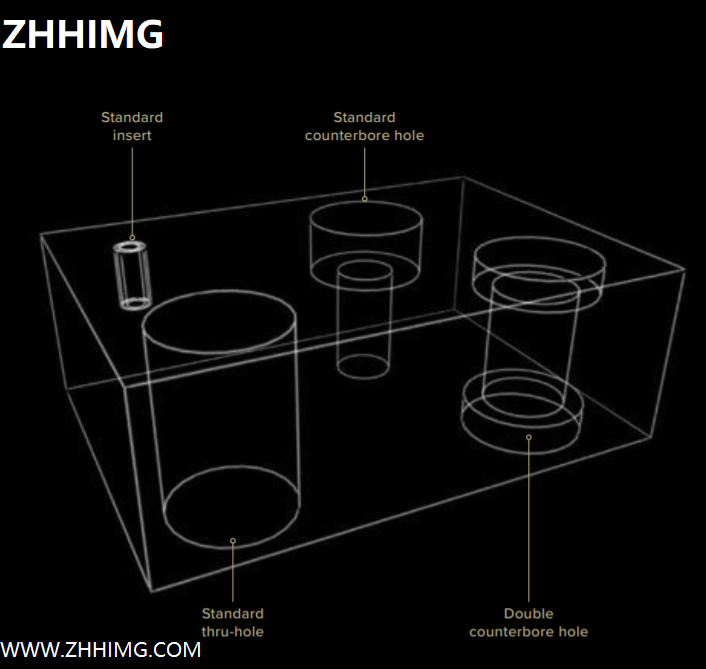
Pila ka klase sa mga lungag ang naa sa precision granite?
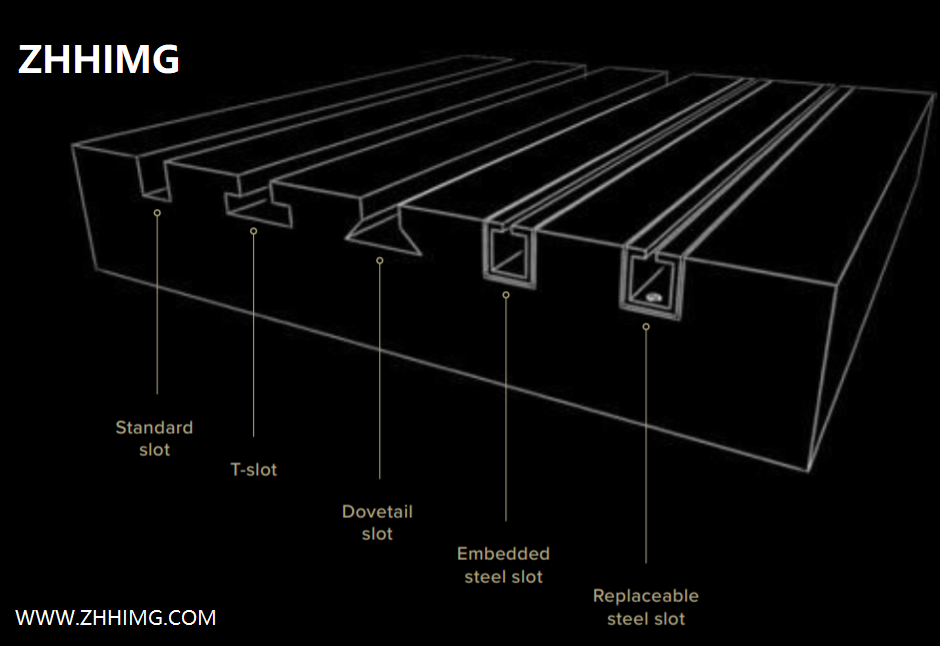
Mga Slot sa mga Komponente sa Precision Granite
Alang sa daghang mga pabrika, mga lawak sa inspeksyon ug mga laboratoryo, ang mga precision granite surface plate gisaligan isip basehan sa tukmang pagsukod. Tungod kay ang matag linear nga pagsukod nagdepende sa tukmang reference surface diin gikuha ang katapusang mga dimensyon, ang mga surface plate naghatag sa labing maayo nga reference plane alang sa inspeksyon sa trabaho ug layout sa dili pa ang machining. Kini usab mga sulundon nga base alang sa paghimo og mga sukod sa gitas-on ug gaging surfaces. Dugang pa, ang taas nga lebel sa pagkapatag, kalig-on, kinatibuk-ang kalidad ug pagkagama naghimo kanila nga maayong kapilian alang sa pag-mount sa sopistikado nga mekanikal, elektronik ug optical gaging systems. Alang sa bisan hain niini nga mga proseso sa pagsukod, importante nga ipadayon ang pagka-calibrate sa mga surface plate.
Repeat Measurements and Flatness
Ang pagkapatag ug ang balik-balik nga pagsukod parehong importante aron masiguro ang tukma nga nawong. Ang pagkapatag mahimong isipon nga ang tanang punto sa nawong anaa sulod sa duha ka parallel nga mga eroplano, ang base plane ug ang roof plane. Ang pagsukod sa distansya tali sa mga eroplano mao ang kinatibuk-ang pagkapatag sa nawong. Kini nga sukod sa pagkapatag kasagarang adunay tolerance ug mahimong maglakip sa usa ka grade designation.
The flatness tolerances for three standard grades are defined in the federal specification as determined by the following formula:
DIN Standard, GB Standard, ASME Standard, JJS standard... lain-laing nasud nga adunay lain-laing baruganan...
Dugang detalye bahin sa estandard.
In addition to flatness, repeatability must be ensured. A repeat measurement is a measurement of local flatness areas. It is a measurement taken anywhere on the surface of a plate that will repeat within the stated tolerance. Controlling local area flatness to a tighter tolerance than overall flatness guarantees a gradual change in surface flatness profile, thereby minimizing local errors.
Aron masiguro nga ang usa ka surface plate makatuman sa mga espesipikasyon sa pagkapatag ug balik-balik nga pagsukod, ang mga tiggama sa granite surface plate kinahanglan mogamit sa Federal Specification GGG-P-463c isip basehan sa ilang mga espesipikasyon. Kini nga sumbanan nagtubag sa katukma sa balik-balik nga pagsukod, mga kabtangan sa materyal sa surface plate granite, pagkahuman sa nawong, lokasyon sa support point, pagkagahi, madawat nga mga pamaagi sa inspeksyon ug pag-instalar sa mga threaded insert.
Checking Plate Accuracy
Pinaagi sa pagsunod sa pipila ka yanong mga giya, ang usa ka pamuhunan sa usa ka granite surface plate molungtad og daghang katuigan. Depende sa paggamit sa plato, palibot sa tindahan ug gikinahanglan nga katukma, ang kasubsob sa pagsusi sa katukma sa surface plate managlahi. Ang kinatibuk-ang lagda mao nga ang usa ka bag-ong plato makadawat og kompleto nga recalibration sulod sa usa ka tuig gikan sa pagpalit. Kung ang plato kanunay nga gigamit, mas maayo nga pamub-on kini nga interval ngadto sa unom ka bulan.
Before a surface plate has worn beyond specification for overall flatness, it will show worn or wavy posts. Monthly inspection for repeat measurement errors using a repeat reading gage will identify wear spots. A repeat reading gage is a high-precision instrument that detects local error and can be displayed on a high magnification electronic amplifier.
An effective inspection program should include regular checks with an autocollimator, providing actual calibration of overall flatness traceable to National Institute of Standards and Technology (NIST). Comprehensive calibration by the manufacturer or an independent company is necessary from time to time.
Variations Between Calibrations
Sa pipila ka mga kaso, adunay mga kalainan tali sa mga kalibrasyon sa surface plate. Usahay ang mga hinungdan sama sa pagbag-o sa surface nga resulta sa pagkaguba, sayop nga paggamit sa kagamitan sa inspeksyon o paggamit sa wala ma-calibrate nga kagamitan mahimong hinungdan niini nga mga kalainan. Bisan pa, ang duha ka labing komon nga hinungdan mao ang temperatura ug suporta.
One of the most important variables is temperature. For instance, the surface might have been washed with a hot or cold solution prior to calibration and not allowed sufficient time to normalize. Other causes of temperature change include drafts of cold or hot air, direct sunlight, overhead lighting or other sources of radiant heat on the surface of the plate.
There also can be variations in the vertical temperature gradient between winter and summer. In some cases, the plate is not allowed sufficient time to normalize after shipment. It is a good idea to record the vertical gradient temperature at the time the calibration is performed.
Another common cause for calibration variation is a plate that is improperly supported. A surface plate should be supported at three points, ideally located 20% of the length in from the ends of the plate. Two supports should be located 20% of the width in from the long sides, and the remaining support should be centered.
Only three points can rest solidly on anything but a precision surface. Attempting to support the plate at more than three points will cause the plate to receive its support from various combinations of three points, which will not be the same three points on which it was supported during production. This will introduce errors as the plate deflects to conform to the new support arrangement. Consider using steel stands with support beams designed to line up with the proper support points. Stands for this purpose are generally available from the surface plate manufacturer.
If the plate is properly supported, precise leveling is only necessary if an application specifies it. Leveling is not necessary to maintain the accuracy of a properly supported plate.
Extend Plate Life
Ang pagsunod sa pipila ka mga giya makapakunhod sa pagkaguba sa usa ka granite surface plate ug sa katapusan, makapalugway sa kinabuhi niini.
Una, importante nga huptan nga limpyo ang plato. Ang abrasive dust nga dala sa hangin kasagaran mao ang pinakadako nga hinungdan sa pagkaguba ug pagkagisi sa plato, tungod kay kini kasagarang motapot sa mga workpiece ug sa mga contact surface sa mga gauge.
It also is important to cover plates to protect it from dust and damage. Wear life can be extended by covering the plate when not in use.
I-rotate ang plato matag karon ug unya aron dili sobra nga magamit ang usa ka lugar. Usab, girekomenda nga ilisan ang steel contact pad sa gauging og carbide pad.
Avoid setting food or soft drinks on the plate. Many soft drinks contain either carbonic or phosphoric acid, which can dissolve the softer minerals and leave small pits in the surface.
Where to Relap
Kon ang usa ka granite surface plate kinahanglan nga i-resurface, hunahunaa kon ipahimo ba kini nga serbisyo sa on-site o sa calibration facility. Mas maayo nga ipa-relapse ang plate sa pabrika o sa usa ka dedikado nga pasilidad. Apan, kon ang plate dili kaayo grabe ang pagkaguba, kasagaran sulod sa 0.001 ka pulgada sa gikinahanglan nga tolerance, mahimo kini nga i-resurface sa on-site. Kon ang usa ka plate naguba hangtod sa punto nga kini sobra sa 0.001 ka pulgada nga wala sa tolerance, o kon kini adunay dili maayo nga mga pit o nick, nan kinahanglan kini ipadala sa pabrika alang sa grinding sa dili pa i-relapse.
A calibration facility has the equipment and factory setting providing the optimum conditions for proper plate calibration and rework if necessary.
Kinahanglan nga mag-amping pag-ayo sa pagpili og on-site calibration ug resurfacing technician. Pangayo og accreditation ug i-verify nga ang kagamitan nga gamiton sa technician adunay traceable calibration. Ang kasinatian usa usab ka importante nga butang, tungod kay nagkinahanglan og daghang tuig aron makat-on unsaon pag-lap sa precision granite sa husto nga paagi.
Critical measurements start with a precision granite surface plate as a baseline. By ensuring a reliable reference by using a properly calibrated surface plate, manufacturers have one of the essential tools for reliable measurements and better quality parts.Q
Checklist for Calibration Variations
1. Ang nawong gihugasan gamit ang init o bugnaw nga solusyon sa dili pa ang kalibrasyon ug wala gihatagan og igong panahon aron ma-normalize.
2. Ang plato dili hustong gisuportahan.
3. Pagbag-o sa temperatura.
4. Mga draft.
5. Direktang kahayag sa adlaw o uban pang init nga gikan sa ibabaw sa plato. Siguruha nga ang suga sa ibabaw dili makapainit sa nawong.
6. Mga pagkalainlain sa bertikal nga gradient sa temperatura tali sa tingtugnaw ug ting-init. Kon mahimo, hibal-i ang bertikal nga gradient nga temperatura sa panahon nga gihimo ang kalibrasyon.
7. Ang plato wala gihatagan og igong panahon aron ma-normalize human sa pagpadala.
8. Dili hustong paggamit sa mga kagamitan sa inspeksyon o paggamit sa mga kagamitan nga wala ma-calibrate.
9. Pagbag-o sa nawong nga resulta sa pagkaguba.
Tech Tips
- Tungod kay ang matag linear nga sukod nagdepende sa usa ka tukmang reference surface diin gikuha ang katapusang mga dimensyon, ang mga surface plate naghatag sa labing maayo nga reference plane alang sa inspeksyon sa trabaho ug layout sa dili pa ang machining.
- Controlling local area flatness to a tighter tolerance than overall flatness guarantees a gradual change in surface flatness profile, thereby minimizing local errors.
- Ang usa ka epektibo nga programa sa inspeksyon kinahanglan maglakip sa regular nga mga pagsusi gamit ang autocollimator, nga maghatag sa aktuwal nga kalibrasyon sa kinatibuk-ang patag nga masubay sa National Inspection Authority.
Lakip sa mga partikulo sa mineral nga naglangkob sa granite, kapin sa 90% ang feldspar ug quartz, diin ang feldspar ang kadaghanan. Ang feldspar kasagaran puti, abohon, ug pula ang unod, ug ang quartz kasagaran walay kolor o abohon nga puti, nga naglangkob sa sukaranang kolor sa granite. Ang feldspar ug quartz mga gahi nga mineral, ug lisod kini ibalhin gamit ang kutsilyo nga asero. Mahitungod sa mga itom nga lama sa granite, kasagaran itom nga mika, adunay uban pang mga mineral. Bisan kung ang biotite medyo humok, ang abilidad niini sa pagsukol sa stress dili huyang, ug sa samang higayon adunay gamay nga kantidad sa granite, kasagaran wala pay 10%. Kini ang kondisyon sa materyal diin ang granite labi ka lig-on.
Laing rason nganong lig-on ang granite kay ang mga partikulo sa mineral niini hugot nga nagbugkos sa usag usa ug nasulod sa usag usa. Ang mga buho kasagaran wala pay 1% sa kinatibuk-ang gidaghanon sa bato. Kini naghatag sa granite sa abilidad nga makasugakod sa kusog nga presyur ug dili daling masudlan sa kaumog.
Ang mga sangkap sa granite hinimo sa bato nga walay taya, acid ug alkali nga resistensya, maayo nga resistensya sa pagkaguba ug taas nga kinabuhi sa serbisyo, walay espesyal nga pagmentinar. Ang mga sangkap sa granite precision kasagarang gigamit sa tooling sa industriya sa makinarya. Busa, gitawag kini nga granite precision components o granite components. Ang mga kinaiya sa granite precision components parehas ra sa mga granite platform. Pasiuna sa tooling ug pagsukod sa granite precision components: Ang precision machining ug micro machining technology importante nga direksyon sa pag-uswag sa industriya sa paggama og makinarya, ug kini nahimong usa ka importante nga timailhan sa pagsukod sa usa ka high-tech nga lebel. Ang pag-uswag sa cutting-edge nga teknolohiya ug ang industriya sa depensa dili mabulag gikan sa precision machining ug micro-machining technology. Ang mga sangkap sa granite mahimong hapsay nga i-slide sa pagsukod, nga walay stagnation. Ang pagsukod sa work surface, ang kinatibuk-ang mga garas dili makaapekto sa katukma sa pagsukod. Ang mga sangkap sa granite kinahanglan nga gidisenyo ug gihimo sumala sa mga kinahanglanon sa demand side.
Nataran sa aplikasyon:
Sama sa atong nahibaloan, daghang mga makina ug kagamitan ang nagpili sa mga sangkap nga granite nga may katukma.
Ang mga sangkap sa granite gigamit para sa dynamic motion, linear motors, cmm, cnc, laser machine...
welcome sa pagkontak kanamo alang sa dugang nga impormasyon.
Ang mga gamit sa pagsukod sa granite ug mga mekanikal nga sangkap sa granite hinimo gikan sa taas nga kalidad nga Jinan Black granite. Tungod sa ilang taas nga katukma, dugay nga pagkagama, maayong kalig-on ug resistensya sa kaagnasan, kini labi nga gigamit sa pag-inspeksyon sa produkto sa modernong industriya ug mga siyentipikong natad sama sa mekanikal nga aerospace ug siyentipikong mga panukiduki.
Mga Bentaha
----Doble ang katig-a sa puthaw nga gihulma;
----Ang gagmay nga mga pagbag-o sa dimensyon tungod sa mga pagbag-o sa temperatura;
----Walay pagkapiit, busa walay pagkabalda sa trabaho;
----Walay mga burr o protrusion tungod sa pino nga istruktura sa lugas ug gamay nga pagkapilit, nga nagsiguro sa taas nga lebel sa pagkapatag sa taas nga kinabuhi sa serbisyo ug dili makadaot sa ubang mga bahin o instrumento;
----Walay problema nga operasyon para gamiton sa mga magnetic nga materyales;
----Taas ang kinabuhi ug walay taya, nga moresulta sa ubos nga gasto sa pagmentinar.
Ang mga precision granite surface plates kay precision nga gi-lapped sa taas nga standard sa pagka-flatness aron makab-ot ang katukma ug gigamit isip base alang sa pag-mount sa sopistikado nga mechanical, electronic ug optical gauging systems.
Pipila sa talagsaon nga mga bahin sa granite surface plate:
Pagkaparehas sa Katig-a;
Tukma ubos sa mga Kondisyon sa karga;
Makasuhop sa Pag-uyog;
Sayon Limpyohan;
Dili Maputos;
Ubos nga Porosidad;
Dili Makapasakit;
Dili-Magnetiko
Mga Bentaha sa Granite Surface Plate
First, the rock after a long period of natural aging, uniform structure, coefficient minimum, the internal stress completely disappear, not deformed, so the precision is high.
Ipadala ang Email
Skype
Ingles
Aleman
Pranses
Portuges
Kinatsila
Hapon
Koreano
Arabiko
Irish
Griyego
Turko
Italyano
Danish
Romaniano
Indones
Czech
Sweko
Polish
Basque
Katalan
Esperanto
Hindi
Lao
Albanian
Amharic
Armenian
Azerbaijani
Belarusian
PBengali
Bosnian
Bulgarian
Cebuano
Chichewa
Corsican
Kroato
Olandes
Estonian
Pilipino
Pinlandes
Frisian
Galician
Georgian
Gujarati
Haitian
Hausa
HawaiianoHebreoHmong
HungarianoIcelandicIgbo
JavaneseKannada
Kazakh
Khmer
Kurd
Kirghiz
Latin
Latviano
Lithuanian
Luxembourg..
Macedonian
Malagasi
Malayo
Malayalam
Maltese
Māori
Marathi
Mongolian
Burmese
Nepali
Norwegian
Pashto
Persiano
Punjabi
Serbiano
Sesotho
Sinhala
Eslobako
- Eslobenyano
- Somali
- Samoan
- Scots Gaelic
- Shona
- Sindhi
- Sundanese
- Swahili
- Tajik
- Tamil
- Telugu
Thai
Ukrainiano
UrduAUzbek2VietnameseLWelshAXhosa
Yiddish
Yoruba
Zulu
Kinyarwanda
Tatar
Mga Turkmen
Uyghur
Intsik
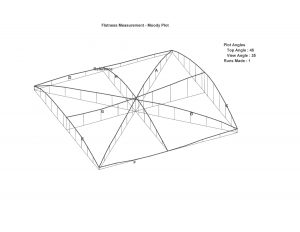
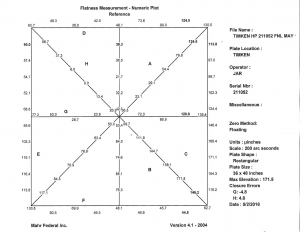
Routine surface plate calibration is necessary to ensure flatness and repeatability over time. The precision measurement group at Cross is ISO 17025 accredited for calibration of surface plate flatness and repeatability. We utilize the Mahr Surface Plate Certification System featuring:
- Moody and Profile Analysis,
- Isometric or Numeric plots,
- Multiple Run Average, and
- Automatic Grading According to Industry Standards.
The Mahr Computer Assisted Model determines any angular or linear deviation from absolute level, and is ideally suited for highly precise profiling of surface plates.
Intervals between calibrations will vary depending on the frequency of use, the environmental conditions where the plate is located, and the specific quality requirements of your company. Properly maintaining your surface plate may allow for longer intervals between each calibration, helps you avoid the added cost of relapping, and most importantly ensures the measurements you obtain on the plate are as accurate as possible. Although surface plates appear robust, they are precision instruments and should be treated as such. Here are some things to consider regarding care of your surface plates:
- Keep the plate clean, and if possible cover it when it is not in use
- Nothing should be placed on the plate other than gages or pieces to be measured.
- Don’t use the same spot on the plate every time.
- If possible, rotate the plate periodically.
- Respect the load limit of your plate
Precision Granite Base Can Improve Machine Tool Performances
Requirements are constantly increasing in mechanical engineering in general and in machine tool construction in particular. Achieving maximum precision and performance values without increasing costs are constant challenges to being competitive. The machine tool bed is a decisive factor here. Therefore, more and more machine tool manufacturers are relying on granite. Due to its physical parameters, it offers clear advantages that cannot be achieved with steel or polymer concrete.
Granite is a so-called volcanic deep rock and has a very dense and homogeneous structure with an extremely low coefficient of expansion, low thermal conductivity and high vibration damping.
Below you will discover why the common opinion that granite is mainly only suitable as machine base for high-end coordinate measuring machines is long outdated and why this natural material as a machine tool base is a very advantageous alternative to steel or cast iron even for high-precision machine tools.
We can manufacture granite components for dynamic motion, granite components for linear motors, granite components for ndt, granite components for xray, granite components for cmm, granite components for cnc, granite precision for laser, granite components for aerospace, granite components for precision stages...
High Added Value Without Additional Costs
The increasing use of granite in mechanical engineering is not so much due to the massive increase in the price of steel. Rather, it is because the added value for the machine tool achieved with a machine bed made of granite is possible at very little or no extra cost. This is proven by cost comparisons of well-known machine tool manufacturers in Germany and Europe.
The considerable gain in thermodynamic stability, vibration damping and long-term precision made possible by granite cannot be achieved with a cast iron or steel bed, or only at relatively high cost. For example, thermal errors can account for up to 75% of the total error of a machine, with compensation often attempted for by software – with moderate success. Due to its low thermal conductivity, granite is the better foundation for long-term precision.
With a tolerance of 1 μm, granite easily meets the flatness requirements according to DIN 876 for the degree of accuracy 00. With a value of 6 on the hardness scale 1 to 10, it is extremely hard, and with its specific weight of 2.8g/cm³ it almost reaches the value of aluminium. This also results in additional advantages such as higher feed rates, higher axis accelerations and an extension of the tool life for cutting machine tools. Thus, the change from a cast bed to a granite machine bed moves the machine tool in question into the high-end class in terms of precision and performance – at no extra cost.
Granite’s Improved Ecological Footprint
In contrast to materials such as steel or cast iron, natural stone does not have to be produced with a great deal of energy and using additives. Only relatively small amounts of energy are required for quarrying and surface treatment. This results in a superior ecological footprint, which even at the end of a machine’s life surpasses that of steel as a material. The granite bed can be the basis for a new machine or be used for completely different purposes such as shredding for road construction.
Nor are there any shortages of resources for granite. It is a deep rock formed from magma within the earth’s crust. It has ‘matured’ for millions of years and is available in very large quantities as a natural resource on almost all continents, including all of Europe.
Conclusion: The numerous demonstrable advantages of granite compared to steel or cast iron justify the increasing willingness of mechanical engineers to use this natural material as a foundation for high-precision, high-performance machine tools. Detailed information about granite properties, which are advantageous for machine tools and mechanical engineering, can be found in this further article.
A repeat measurement is a measurement of local flatness areas. The Repeat Measurement specification states that a measurement taken anywhere on the surface of a plate will repeat within the stated tolerance. Controlling local area flatness tighter than overall flatness guarantees a gradual change in surface flatness profile thereby minimizing local errors.
Most manufacturers, including imported brands, adhere to the Federal Specification of overall flatness tolerances but many overlook the repeat measurements. Many of the low value or budget plates available in the market today will not guarantee repeat measurements. A manufacturer who does not guarantee repeat measurements is NOT producing plates that meet the requirements of ASME B89.3.7-2013 or Federal Specification GGG-P-463c, or DIN 876, GB, JJS...
Both are critical to ensure a precision surface for accurate measurements. Flatness specification alone is not sufficient to guarantee measurement accuracy. Take as an example, a 36 X 48 Inspection Grade A surface plate, which meets ONLY the flatness specification of .000300". If the piece being checked bridges several peaks, and the gage being used is in a low spot, the measurement error could be the full tolerance in one area, 000300"! Actually, it can be much higher if the gage is resting on the slope of an incline.
Errors of .000600"-.000800" are possible, depending upon the severity of the slope, and the arm length of the gage being used. If this plate had a Repeat Measurement specification of .000050"F.I.R. then the measurement error would be less than .000050" regardless of where the measurement is taken on the plate. Another problem, which usually arises when an untrained technician attempts to resurface a plate on-site, is the use of Repeat Measurements alone to certify a plate.
The instruments that are used to verify repeatability are NOT designed to check overall flatness. When set to zero on a perfectly curved surface, they will continue to read zero, whether that surface is perfectly flat or perfectly concave or convex 1/2"! They simply verify the uniformity of the surface, not the flatness. Only a plate that meets both the flatness specification AND the repeat measurement specification truly meets the requirements of ASME B89.3.7-2013 or Federal Specification GGG-P-463c.
Ask us about or flatness specification and repeat measurement promise by calling +86 19969991659 or emailing INFO@ZHHIMG.COM
Yes, but they can only be guaranteed for a specific vertical temperature gradient. The effects of thermal expansion on the plate could easily cause a change in accuracy greater than the tolerance if there is a change in the gradient. In some cases, if the tolerance is tight enough, the heat absorbed from overhead lighting can cause enough of a gradient change over several hours.
Granite has a coefficient of thermal expansion of approximately .0000035 inches per inch per 1°F. As an example: A 36" x 48" x 8" surface plate has an accuracy of .000075" (1/2 of Grade AA) at a gradient of 0°F, the top and bottom are the same temperature. If the top of the plate warms up to the point where it is 1°F warmer than the bottom, the accuracy would change to .000275" convex ! Therefore, ordering a plate with a tolerance tighter than Laboratory Grade AA should only be considered if there is adequate climate control.
A surface plate should be supported at 3 points, ideally located 20% of the length in from the ends of the plate. Two supports should be located 20% of the width in from the long sides, and the remaining support should be centered. Only 3 points can rest solidly on anything but a precision surface.
The plate should be supported at these points during production, and it should be supported only at these three points while in use. Attempting to support the plate at more than three points will cause the plate to receive its support from various combinations of three points, which will not be the same 3 points on which it was supported during production. This will introduce errors as the plate deflects to conform to the new support arrangement. All zhhimg steel stands have support beams designed to line up with the proper support points.
If the plate is properly supported, precise leveling is only necessary if your application calls for it. Leveling is not necessary to maintain the accuracy of a properly supported plate.
Why Choose Granite for Machine Bases and Metrology Components?
The answer is 'yes' for almost every application. The advantages of granite include: No rust or corrosion, almost immune to warping, no compensating hump when nicked, longer wear life, smoother action, greater precision, virtually non-magnetic, low co-efficient of thermal expansion, and low maintenance cost.
Granite is a type of igneous rock quarried for its extreme strength, density, durability, and resistance to corrosion. But granite is also very versatile– it’s not just for squares and rectangles! In fact, Starrett Tru-Stone confidently works with granite components engineered in shapes, angles, and curves of all variations on a regular basis—with excellent outcomes.
Through our state of the art processing, cut surfaces can be exceptionally flat. These qualities make granite the ideal material to create custom-size and custom-design machine bases and metrology components. Granite is:
machineable
precisely flat when cut and finished
rust resistant
durable
long lasting
Granite components are also easy to clean. When creating custom designs, be sure to choose granite for its superior benefits.
STANDARDS / HIGH WEAR APPLICATIONS
The granite utilized by ZhongHui for our standard surface plate products has high quartz content, which provides greater resistance to wear and damage. Our Superior Black and Crystal Pink colors have low water absorption rates, minimizing the possibility of your precision gages rusting while setting on the plates. The colors of granite offered by ZhongHui result in less glare, which means less eyestrain for individuals using the plates. We have chosen our granite types while considering thermal expansion in an effort to keep this aspect minimal.
CUSTOM APPLICATIONS
When your application calls for a plate with custom shapes, threaded inserts, slots or other machining, you’ll want to select a material like Black Diabase. This natural material offers superior stiffness, excellent vibration dampening, and improved machinability.
Yes, if they are not too badly worn. Our factory setting and equipment allow the optimum conditions for proper plate calibration and rework if necessary. Generally, if a plate is within .001" of the required tolerance, it can be resurfaced on-site. If a plate is worn to the point where it is more than .001" out of tolerance, or if it is badly pitted or nicked, then it will need to be sent to the factory for grinding prior to relapping.
Great care should be exercised in selecting an on-site calibration and resurfacing technician. We urge you to use caution in selecting your calibration service. Ask for accreditation and verify the equipment that the technician will use has a National Inspection Institution traceable calibration. It takes many years to learn how to properly lap precision granite.
ZhongHui provides quick turn-around on calibrations performed in our factory. Send your plates in for calibration if possible. Your quality and reputation depend on the accuracy of your measurement instruments including surface plates!
Our black surface plates have a significantly higher density and are up to three times as stiff. Therefore, a plate made of the black does not need to be as thick as a granite plate of the same size to have equal or greater resistance to deflection. Reduced thickness means less weight and lower shipping costs.
Beware of others who use lower quality black granite in the same thickness. As stated above, properties of granite, like wood or metal, vary by material and color, and is not an accurate predictor of stiffness, hardness, or wear resistance. In fact, many types of black granite and diabase are very soft and not suitable for surface plate applications.
No. The specialized equipment and training necessary to rework these items requires that they be returned to the factory for calibration and rework.
Yes. Ceramic and granite have similar characteristics, and the methods used to calibrate and lap granite can be used with ceramic items as well. Ceramics are more difficult to lap than granite resulting in a higher cost.
Yes, provided that the inserts are recessed below the surface. If steel inserts are flush with, or above the surface plane, they must be spot-faced down before the plate can be lapped. If required, we can provide that service.
Yes. Steel inserts with the desired thread (English or metric) can be epoxy bonded into the plate at the desired locations. ZhongHui uses CNC machines to provide the tightest insert locations within +/- 0.005”. For less critical inserts, our locational tolerance for threaded inserts is ±.060". Other options include steel T-Bars and dovetail slots machined directly into the granite.
Inserts that are properly bonded using high strength epoxy and good workmanship will withstand a great deal of torsional and shear force. In a recent test, using 3/8"-16 threaded inserts, an independent testing laboratory measured the force required to pull an epoxy-bonded insert from a surface plate. Ten plates were tested. Out of these ten, in nine cases, the granite fractured first. The average load at the point of failure was 10,020 lbs. for gray granite and 12,310 lbs. for black. In the single case where an insert pulled free of the plate, the load at the point of failure was 12,990 lbs.! If a work piece forms a bridge across the insert and extreme torque is applied, it is possible to generate enough force to fracture the granite. Partially for this reason, ZhongHui gives guidelines for the maximum safe torque that can be applied the epoxy bonded inserts: https://www.zhhimg.com/standard-thread-inserts-product/
Yes, but only at our factory. At our plant, we can restore almost any plate to 'like-new' condition, usually for less than half the cost of replacing it. Damaged edges can be cosmetically patched, deep grooves, nicks, and pits can be ground out, and the attached supports can be replaced. In addition, we can modify your plate to increase its versatility by adding solid or threaded steel inserts and cutting slots or clamping lips, per your specifications.
Why Choose Granite?
Granite is a type of igneous rock formed in the Earth millions of years ago. The composition of igneous rock contained many minerals such as quartz that is extremely hard and wear-resistant. In addition to hardness and wear resistance granite has approximately half the coefficient of expansion as cast iron. As its volumetric weight is approximately one third that of cast iron, granite is easier to manoeuvre.
For machine bases and metrology components, black granite is the colour most used. Black granite has a higher percentage of quartz than other colours and is, therefore, the hardest wearing.
Granite is cost-effective, and cut surfaces can be exceptionally flat. Not only can it be hand lapped to achieve extremes of accuracy, but re-conditioning can be performed without moving the plate or table off-site. It is entirely a hand lapping operation and generally costs much less than re-conditioning a cast iron alternative.
These qualities make granite the ideal material to create custom-size and custom-design machine bases and metrology components such as the granite surface plate.
ZhongHui produces bespoke granite products that are created to support specific measurement requirements. These bespoke items vary from straight edges to tri squares. Due to the versatile nature of granite, the components can be produced to any size required; they are hard wearing and long-lasting.
Advantages of Granite Surface Plates
The importance of measuring on an even surface was established by British inventor Henry Maudsley in the 1800s. As a machine tool innovator, he determined that consistent production of parts required a solid surface for reliable measurements.
The industrial revolution created a demand for measuring surfaces, so engineering company Crown Windley created manufacturing standards. The standards for surface plates were first set by Crown in 1904 using metal. As the demand and cost for metal increased, alternative materials for the measuring surface were investigated.
In America, monument creator Wallace Herman established that black granite was an excellent surface plate material alternative to metal. As granite is non-magnetic and doesn’t rust, it soon became the preferred measuring surface.
A granite surface plate is an essential investment for laboratories and test facilities. A granite surface plate of 600 x 600 mm can be mounted on a support stand. The stands provide a working height of 34” (0.86m) with five adjustable points for levelling.
For reliable and consistent measurement results, a granite surface plate is crucial. As the surface is a smooth and stable plane, it enables instruments to be carefully manipulated.
The main advantages of granite surface plates are:
• Non-reflective
• Resistant to chemicals and corrosion
• Low coefficient of expansion compared with cart iron so less affected by temperature change
• Naturally rigid and hard-wearing
• The plane of the surface is unaffected if scratched
• Will not rust
• Non-magnetic
• Easy to clean and maintain
• Calibration and resurfacing can be done onsite
• Suitable for drilling for threaded support inserts
• High vibration damping
For many shops, inspection rooms and laboratories, precision granite surface plates are relied on as the basis for accurate measurement. Because every linear measurement depends on an accurate reference surface from which final dimensions are taken, surface plates provide the best reference plane for work inspection and layout prior to machining. They also are ideal bases for making height measurements and gaging surfaces. Further, a high degree of flatness, stability, overall quality and workmanship make them a good choice for mounting sophisticated mechanical, electronic and optical gaging systems. For any of these measurement processes, it is imperative to keep surface plates calibrated.
Repeat Measurements and Flatness
Both flatness and repeat measurements are critical to ensure a precision surface. Flatness can be considered as all points on the surface being contained within two parallel planes, the base plane and the roof plane. The measurement of distance between the planes is the overall flatness of the surface. This flatness measurement commonly carries a tolerance and may include a grade designation.
The flatness tolerances for three standard grades are defined in the federal specification as determined by the following formula:
Laboratory Grade AA = (40 + diagonal² / 25) x 0.000001 inch (unilateral)
Inspection Grade A = Laboratory Grade AA x 2
Tool Room Grade B = Laboratory Grade AA x 4
In addition to flatness, repeatability must be ensured. A repeat measurement is a measurement of local flatness areas. It is a measurement taken anywhere on the surface of a plate that will repeat within the stated tolerance. Controlling local area flatness to a tighter tolerance than overall flatness guarantees a gradual change in surface flatness profile, thereby minimizing local errors.
To ensure a surface plate meets both the flatness and repeat measurement specifications, manufacturers of granite surface plates should use Federal Specification GGG-P-463c as a basis for their specifications. This standard addresses repeat measurement accuracy, material properties of surface plate granites, surface finish, support point location, stiffness, acceptable methods of inspection and installation of threaded inserts.
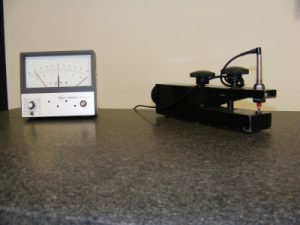
Before a surface plate has worn beyond specification for overall flatness, it will show worn or wavy posts. Monthly inspection for repeat measurement errors using a repeat reading gage will identify wear spots. A repeat reading gage is a high-precision instrument that detects local error and can be displayed on a high magnification electronic amplifier.
Checking Plate Accuracy
By following a few simple guidelines, an investment in a granite surface plate should last for many years. Depending on plate usage, shop environment and required accuracy, frequency of checking the surface plate accuracy varies. A general rule of thumb is for a new plate to receive a full recalibration within one year of purchase. If the plate is used frequently, it is advisable to shorten this interval to six months.
Before a surface plate has worn beyond specification for overall flatness, it will show worn or wavy posts. Monthly inspection for repeat measurement errors using a repeat reading gage will identify wear spots. A repeat reading gage is a high-precision instrument that detects local error and can be displayed on a high magnification electronic amplifier.
An effective inspection program should include regular checks with an autocollimator, providing actual calibration of overall flatness traceable to National Institute of Standards and Technology (NIST). Comprehensive calibration by the manufacturer or an independent company is necessary from time to time.
Variations Between Calibrations
In some cases, there are variations between surface plate calibrations. Sometimes factors such as surface change resulting from wear, incorrect use of inspection equipment or use of noncalibrated equipment can account for these variations. The two most common factors, however, are temperature and support.
One of the most important variables is temperature. For instance, the surface might have been washed with a hot or cold solution prior to calibration and not allowed sufficient time to normalize. Other causes of temperature change include drafts of cold or hot air, direct sunlight, overhead lighting or other sources of radiant heat on the surface of the plate.
There also can be variations in the vertical temperature gradient between winter and summer. In some cases, the plate is not allowed sufficient time to normalize after shipment. It is a good idea to record the vertical gradient temperature at the time the calibration is performed.
Another common cause for calibration variation is a plate that is improperly supported. A surface plate should be supported at three points, ideally located 20% of the length in from the ends of the plate. Two supports should be located 20% of the width in from the long sides, and the remaining support should be centered.
Only three points can rest solidly on anything but a precision surface. Attempting to support the plate at more than three points will cause the plate to receive its support from various combinations of three points, which will not be the same three points on which it was supported during production. This will introduce errors as the plate deflects to conform to the new support arrangement. Consider using steel stands with support beams designed to line up with the proper support points. Stands for this purpose are generally available from the surface plate manufacturer.
If the plate is properly supported, precise leveling is only necessary if an application specifies it. Leveling is not necessary to maintain the accuracy of a properly supported plate.
It is important to keep the plate clean. Airborne abrasive dust is usually the greatest source of wear and tear on a plate, as it tends to embed in workpieces and the contact surfaces of gages. Cover plates to protect them from dust and damage. Wear life can be extended by covering the plate when not in use.
Extend Plate Life
Following a few guidelines will reduce wear on a granite surface plate and ultimately, extend its life.
First, it is important to keep the plate clean. Airborne abrasive dust is usually the greatest source of wear and tear on a plate, as it tends to embed in workpieces and the contact surfaces of gages.
It also is important to cover plates to protect it from dust and damage. Wear life can be extended by covering the plate when not in use.
Rotate the plate periodically so that a single area does not receive excessive use. Also, it is recommended to replace steel contact pads on gaging with carbide pads.
Avoid setting food or soft drinks on the plate. Many soft drinks contain either carbonic or phosphoric acid, which can dissolve the softer minerals and leave small pits in the surface.
Where to Relap
When a granite surface plate needs re-surfacing, consider whether to have this service performed on-site or at the calibration facility. It is always preferable to have the plate relapped at the factory or a dedicated facility. If, however, the plate is not too badly worn, generally within 0.001 inch of the required tolerance, it can be resurfaced on-site. If a plate is worn to the point where it is more than 0.001 inch out of tolerance, or if it is badly pitted or nicked, then it should be sent to the factory for grinding prior to relapping.
A calibration facility has the equipment and factory setting providing the optimum conditions for proper plate calibration and rework if necessary.
Great care should be exercised in selecting an on-site calibration and resurfacing technician. Ask for accreditation and verify the equipment that the technician will use has a NIST-traceable calibration. Experience also is an important factor, as it takes many years to learn how to correctly lap precision granite.
Critical measurements start with a precision granite surface plate as a baseline. By ensuring a reliable reference by using a properly calibrated surface plate, manufacturers have one of the essential tools for reliable measurements and better quality parts.
Checklist for Calibration Variations
- The surface was washed with a hot or cold solution prior to calibration and was not allowed sufficient time to normalize.
- The plate is improperly supported.
- Temperature change.
- Drafts.
- Direct sunlight or other radiant heat on the surface of the plate. Be sure that overhead lighting is not heating the surface.
- Variations in the vertical temperature gradient between winter and summer. If at all possible, know the vertical gradient temperature at the time the calibration is performed.
- Plate not allowed sufficient time to normalize after shipment.
- Improper use of inspection equipment or use of noncalibrated equipment.
- Surface change resulting from wear.
Tech Tips
Because every linear measurement depends on an accurate reference surface from which final dimensions are taken, surface plates provide the best reference plane for work inspection and layout prior to machining.
Controlling local area flatness to a tighter tolerance than overall flatness guarantees a gradual change in surface flatness profile, thereby minimizing local errors.